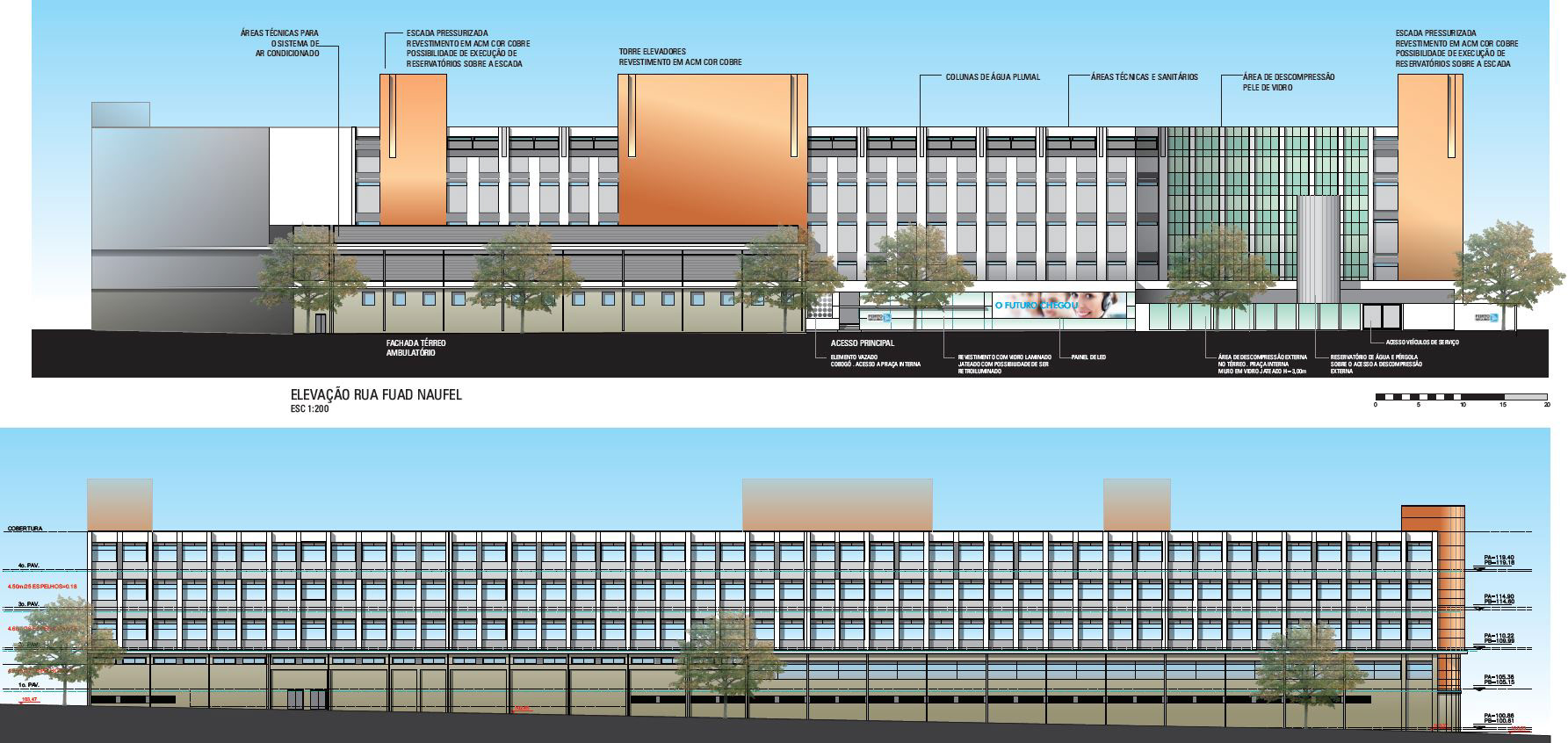
Preliminary study for the facades
Corporate Architecture
Retrofit | Call Center Memorial
Porto Seguro Seguros
26,500 m²
Retrofit | Call Center Memorial
Porto Seguro Seguros
26,500 m²
HISTORY AND FIRST IMPRESSIONS
A building next to the Latin America Memorial, built in the 1950s, which housed the Ypiranga Lithographic Company (Graphic Industry), with a constructed area of 26,519.65 m², divided into a ground floor and four upper floors, was chosen to house the new Call Center of Porto Seguro Seguros.
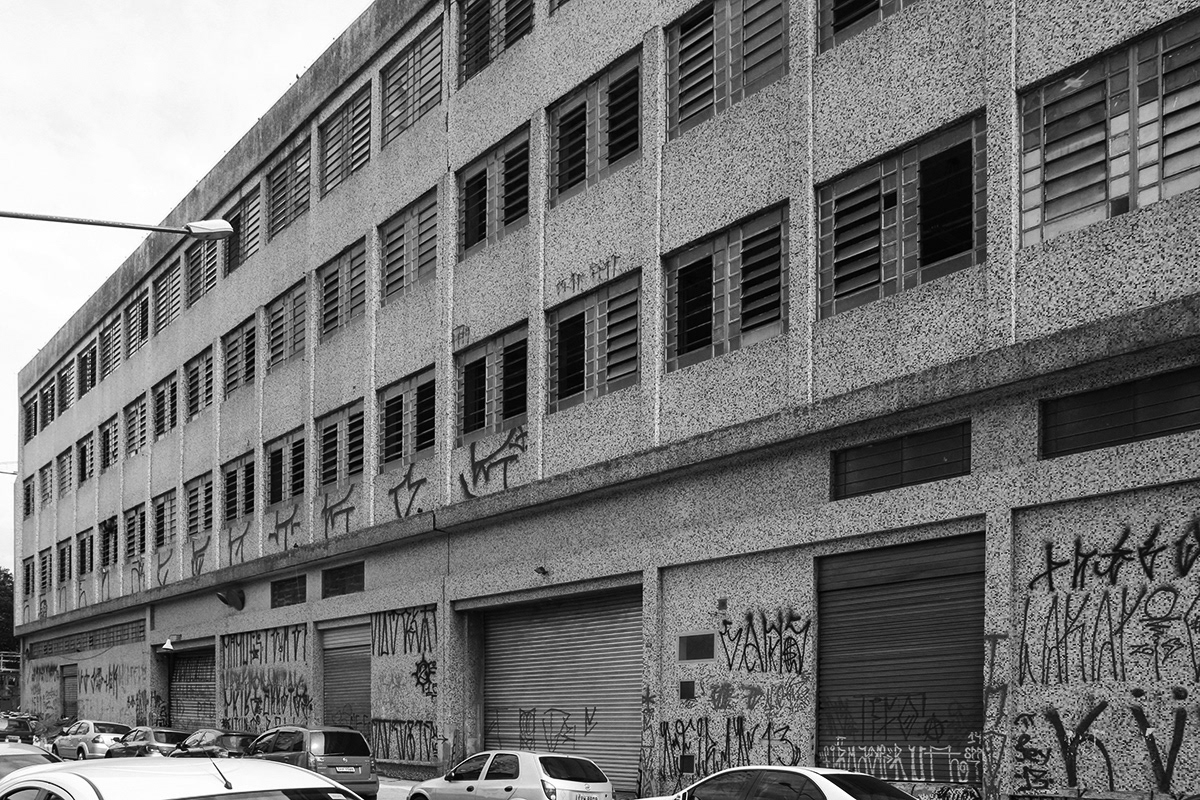
Below are photos from the on-site survey, carried out before the start of the project and construction.
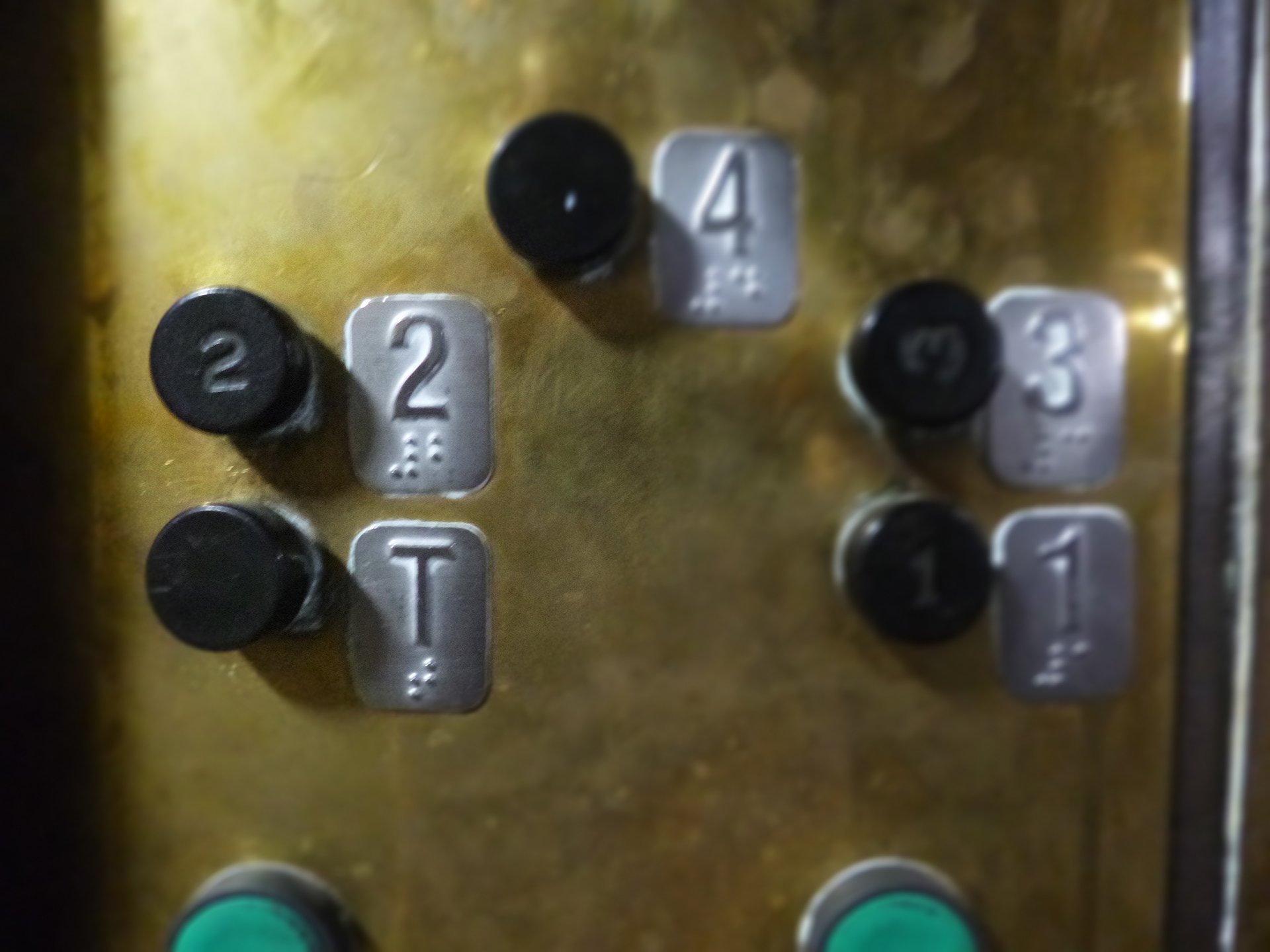
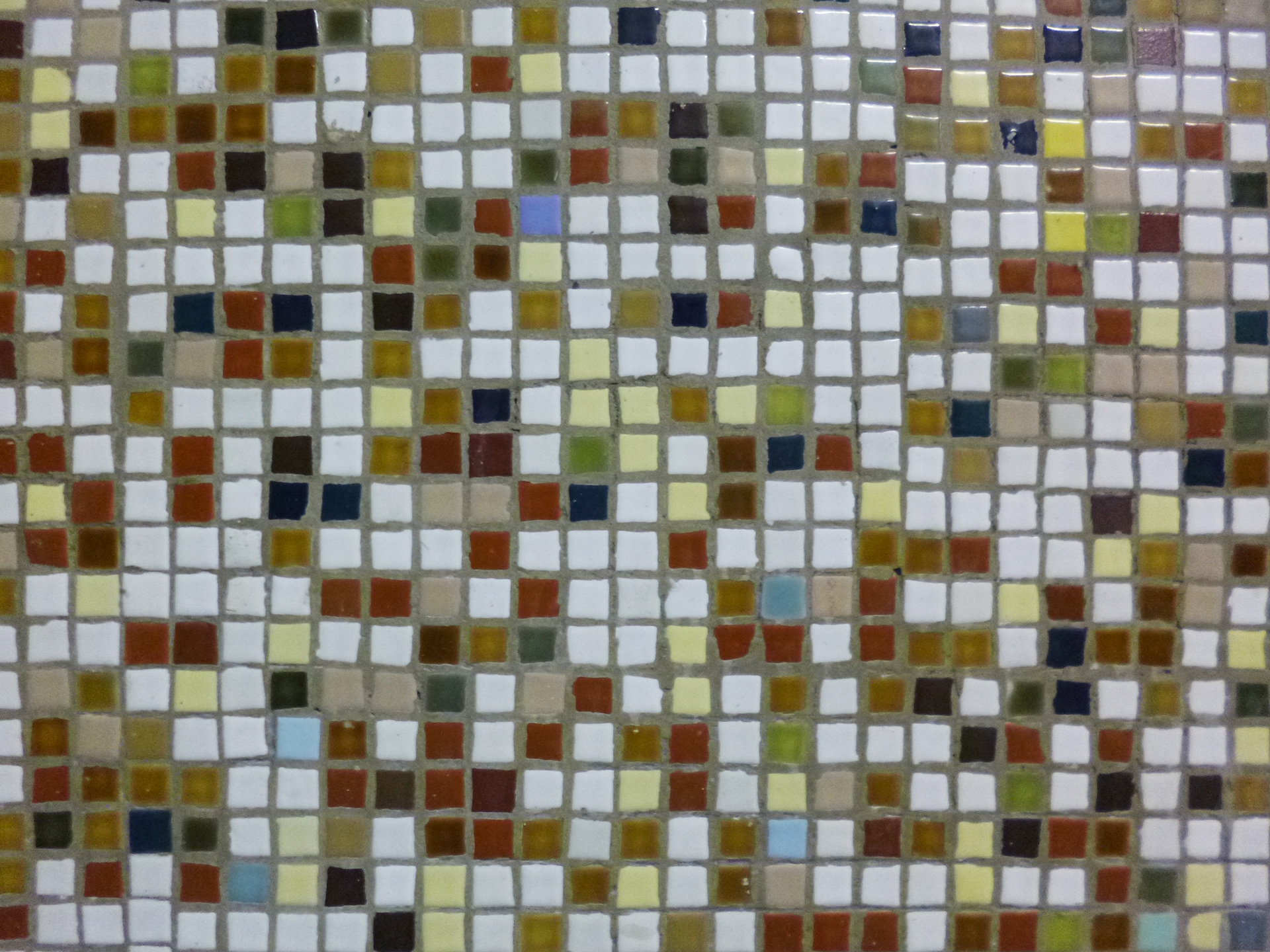
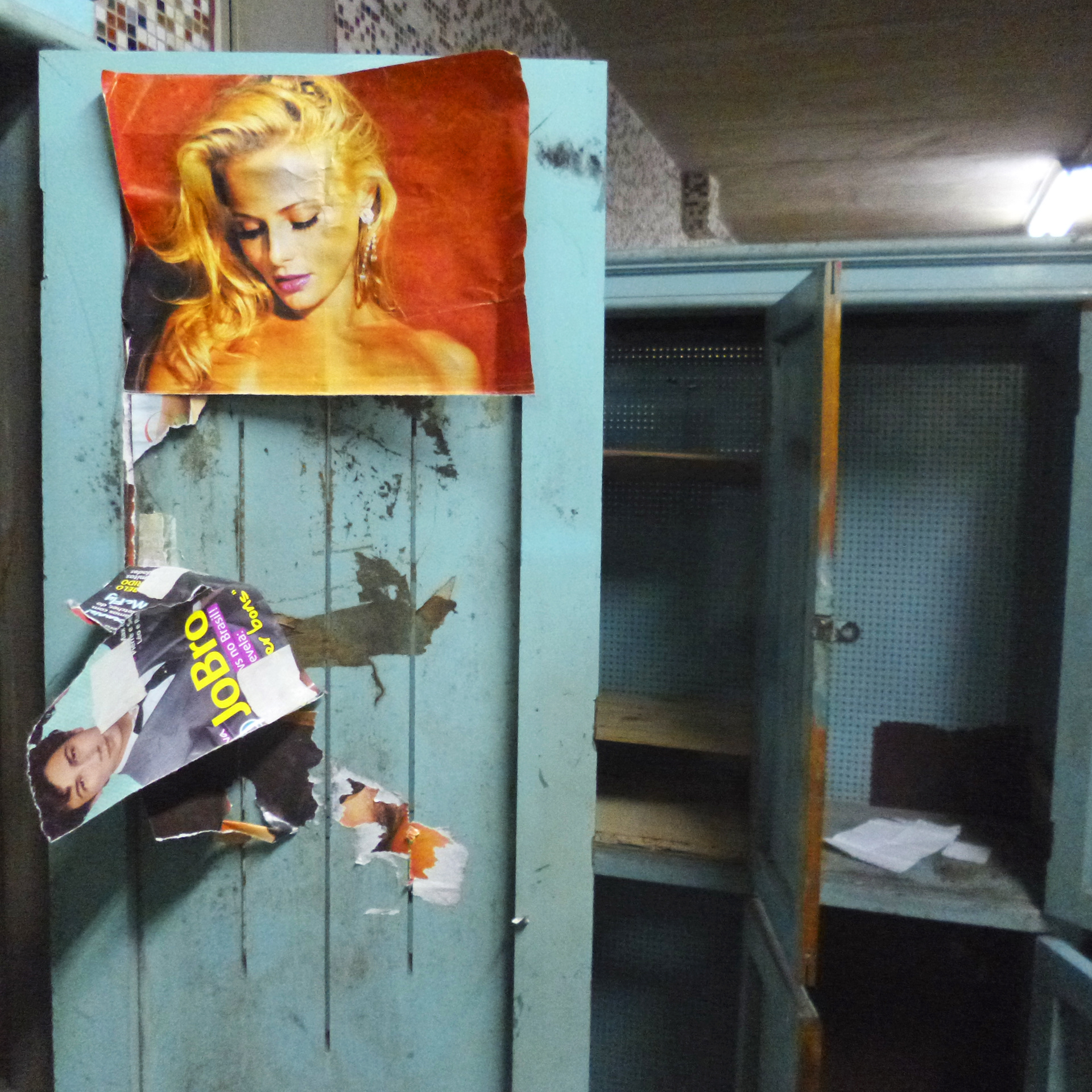
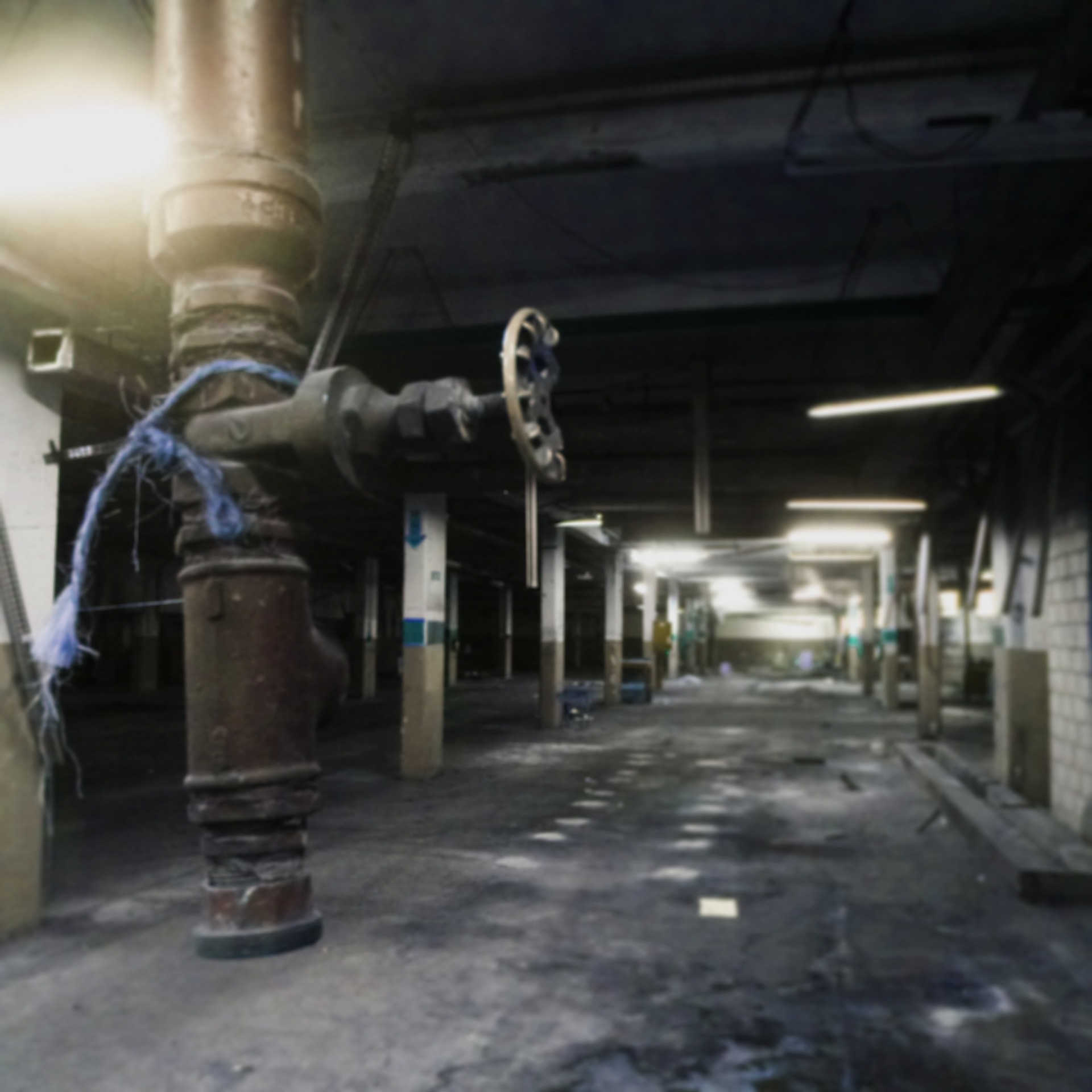
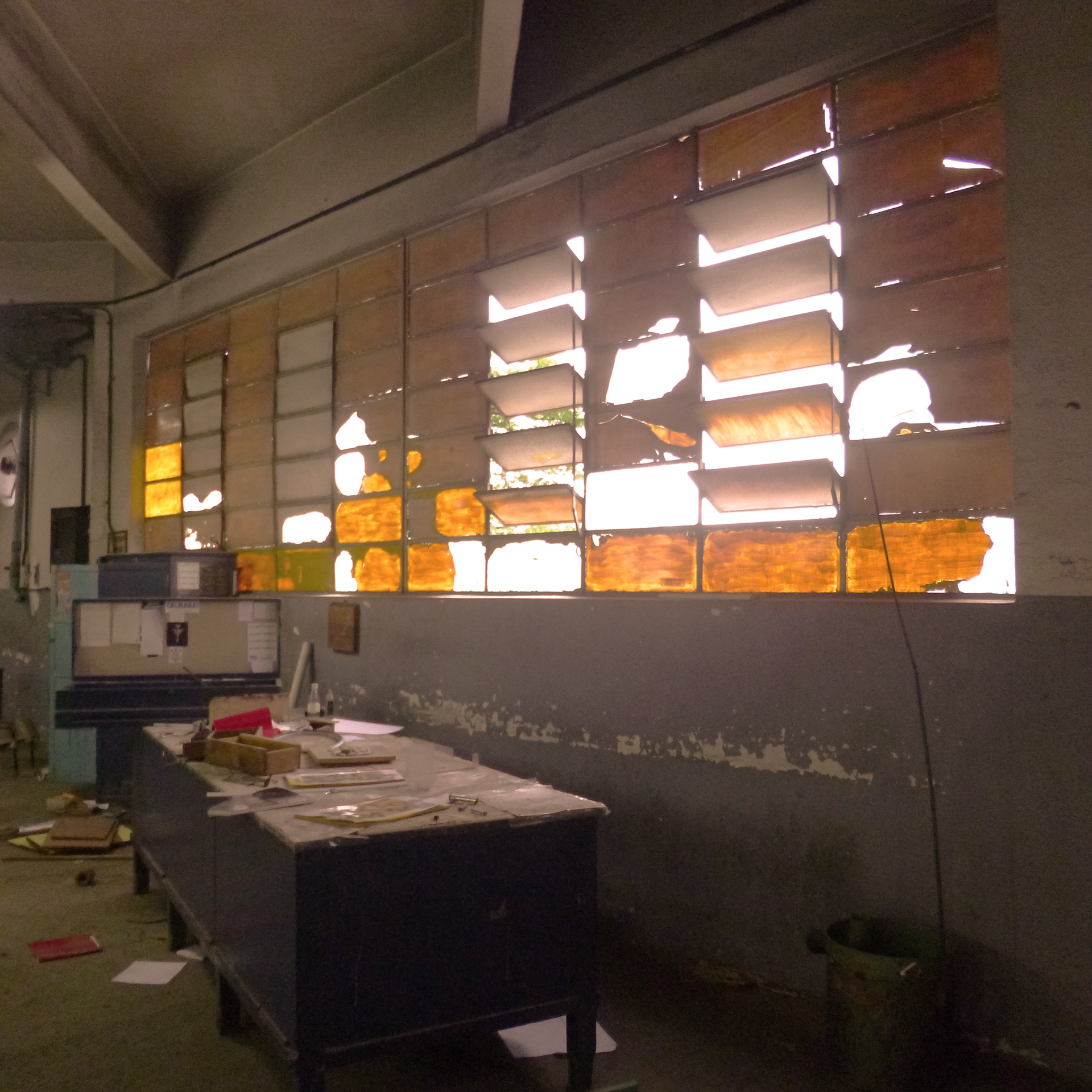
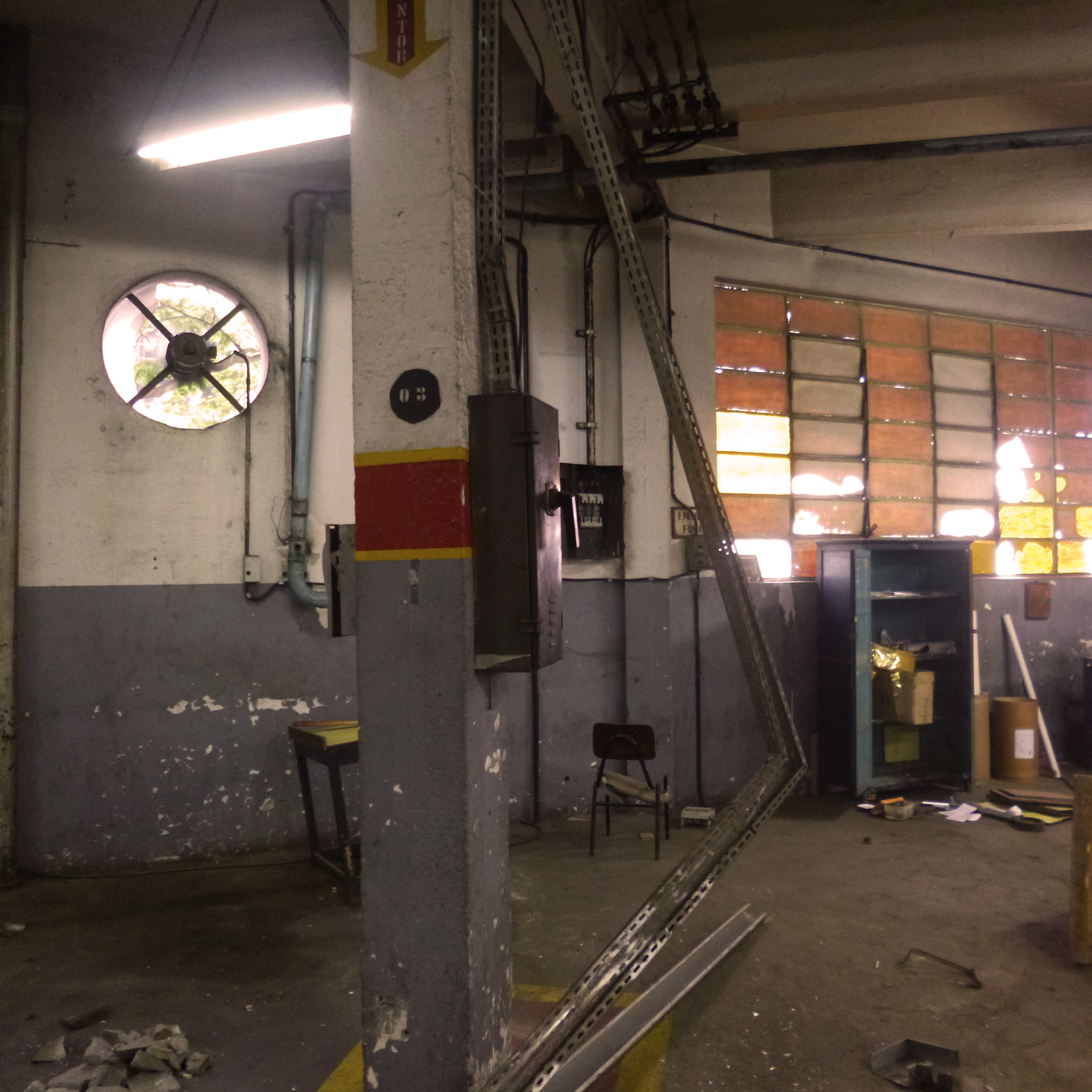
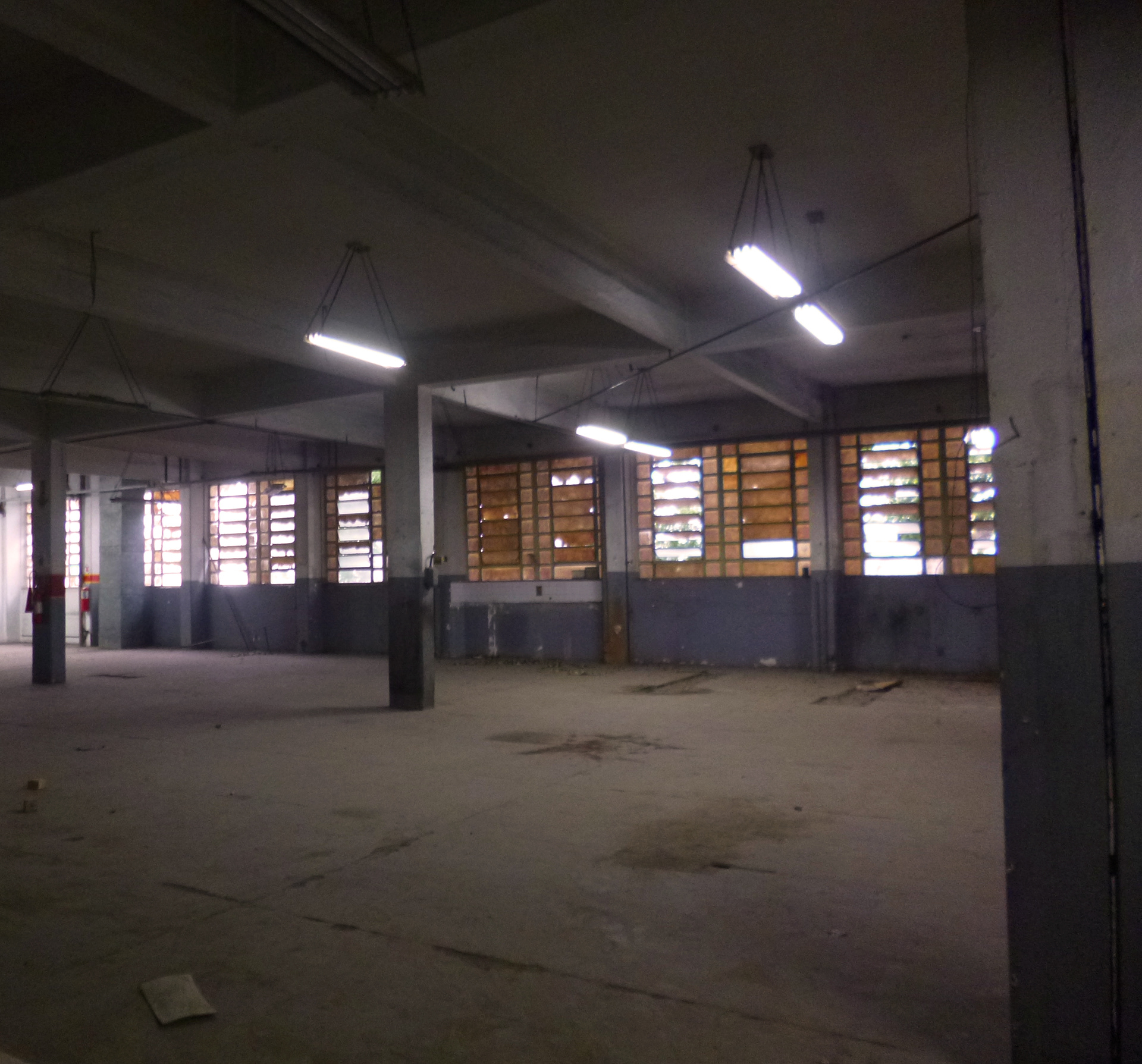
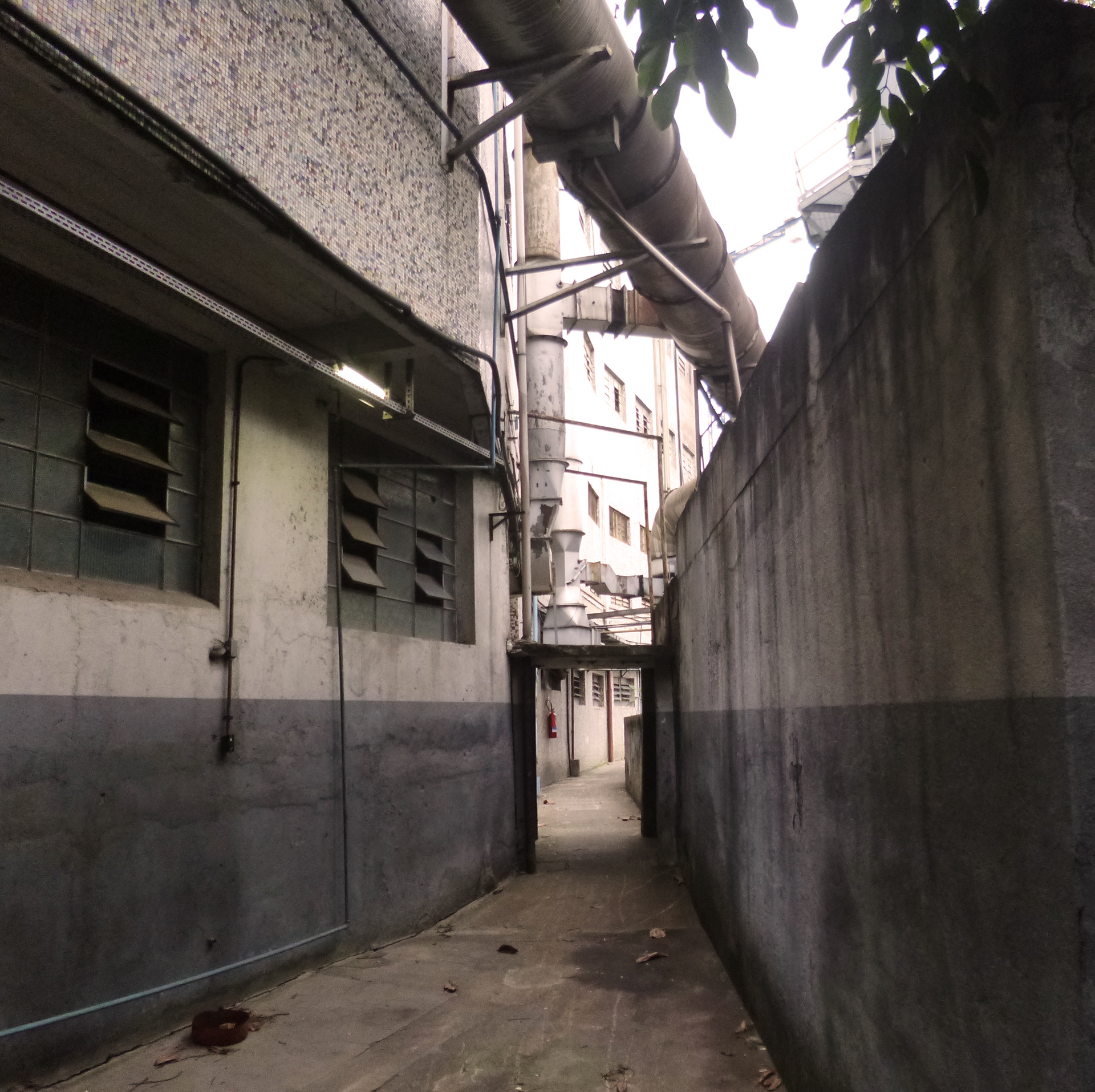
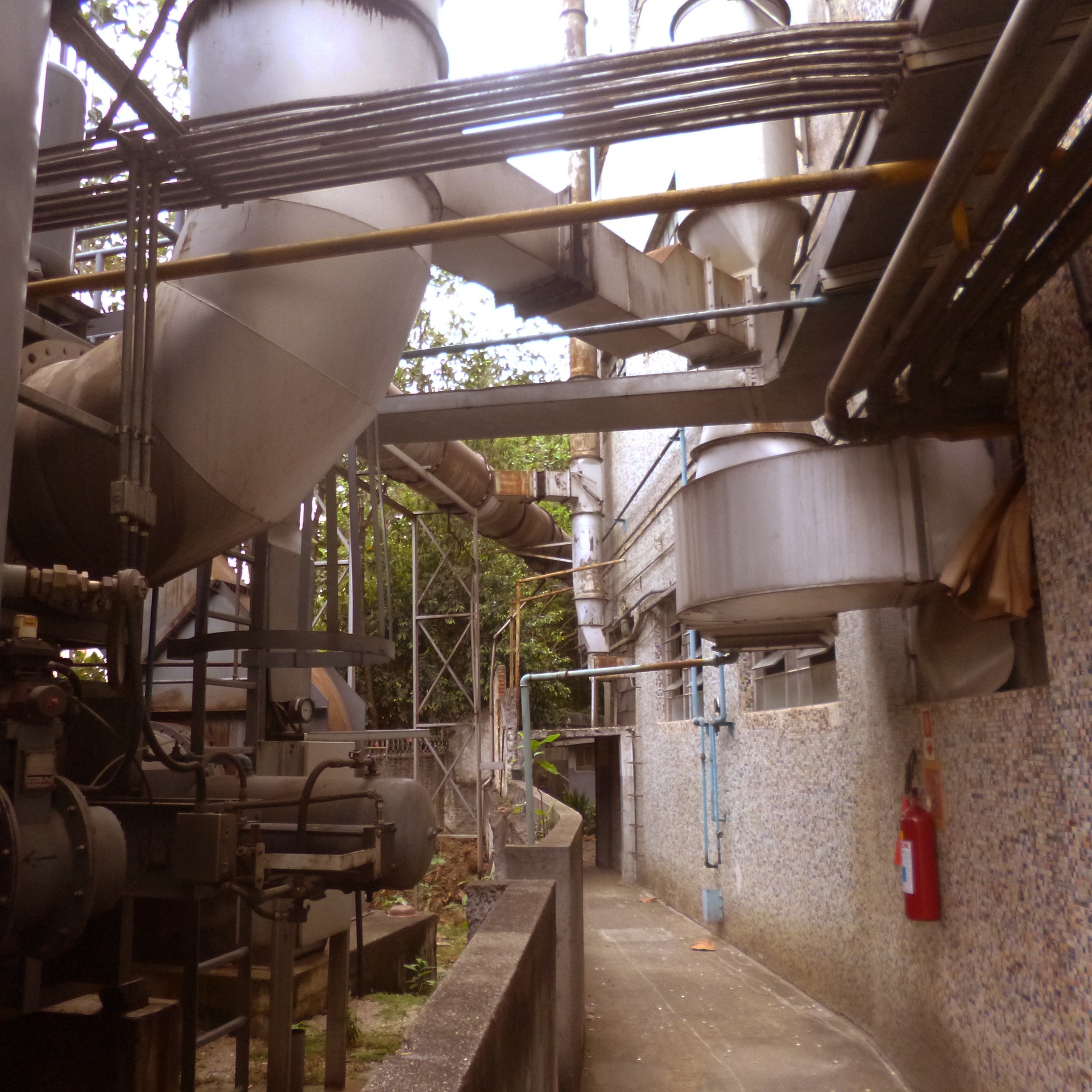
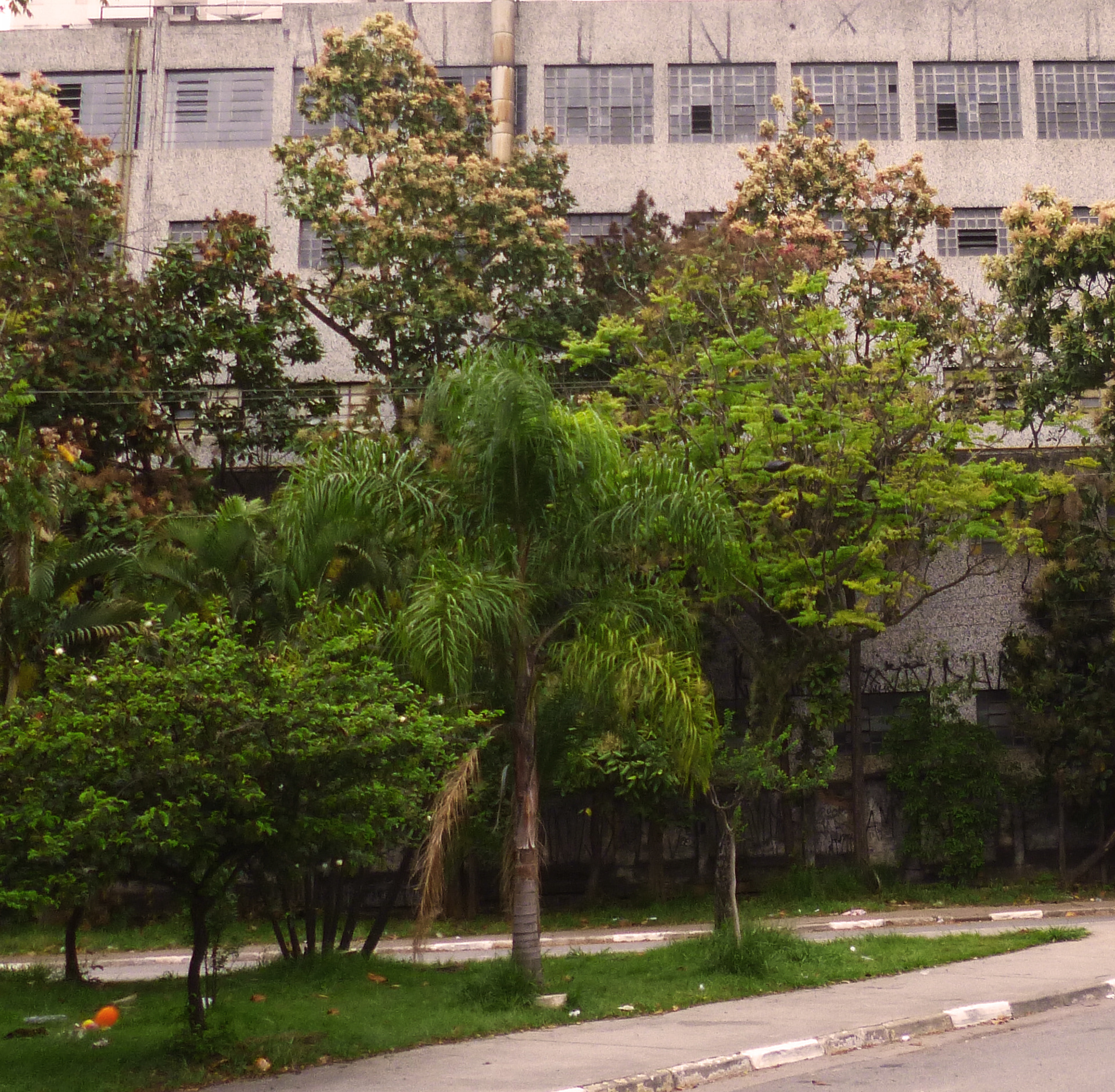
Photos by Frederico Marques
On the ground floor were two large rotary presses belonging to the printing company; the other floors housed the industrial area, and the top floor the offices. Its structure presented some pathologies which, although not compromising the building's stability, needed to be treated or rebuilt.
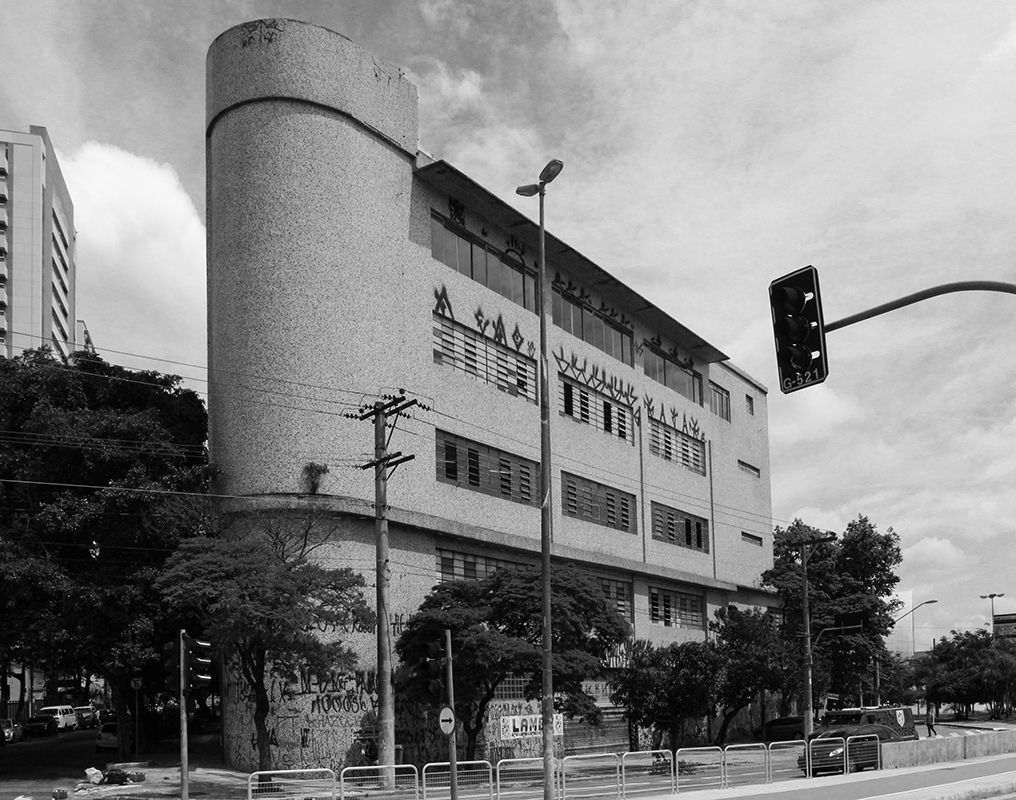
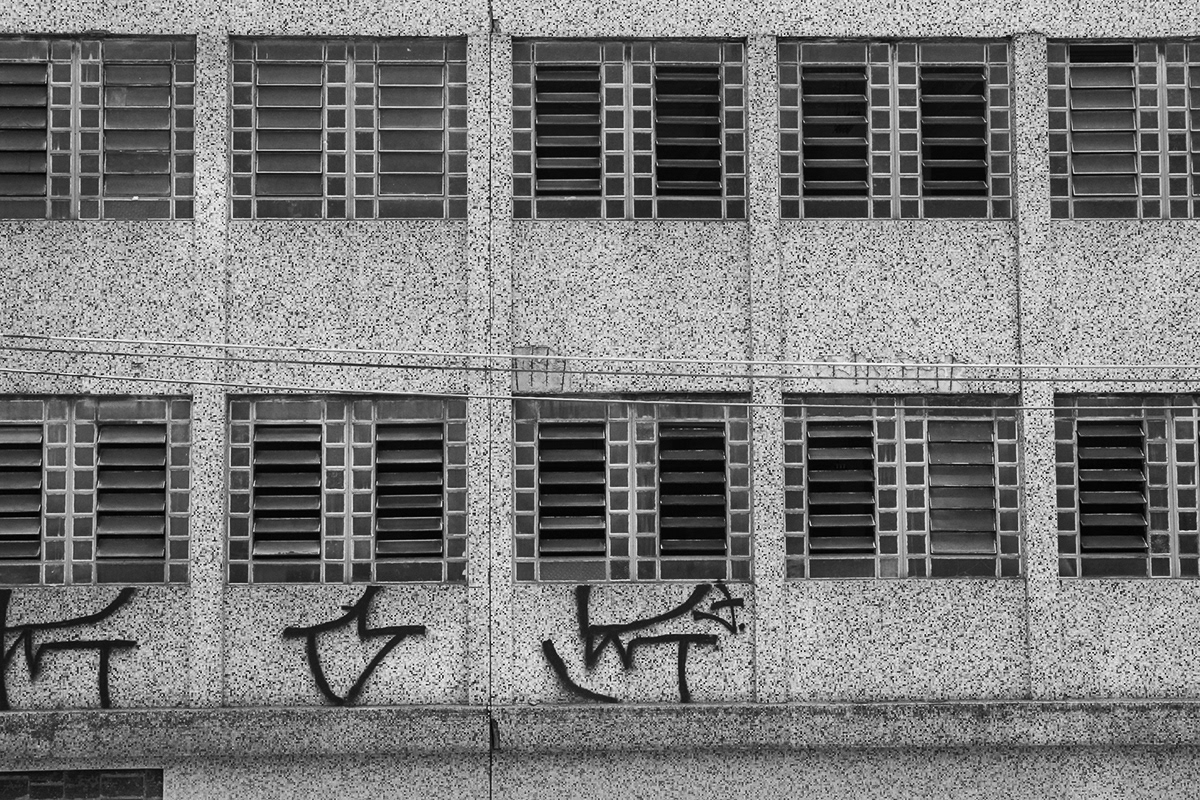
The facades were covered with multicolored ceramic tiles, common at the time for residences but not for a large building. The tiles were in good condition, but the other components of the building were not suitable for our needs.
The facade facing Rua Ferreira de Castro has the ground floor buried due to the unevenness of the streets. On the first floor were the loading and unloading docks and the social access.
The upper floors had tilting iron windows, evenly distributed between the spans of the pillars. The opposite facade, on Rua Fuad Naufel, housed loading and unloading areas for paper rolls and access for workers on the ground floor. The upper floors had more uneven window frames, as they housed restrooms and technical areas of the printing company.
The facade facing Rua Auro de Moura Andrade, smaller than the longitudinal facades, had a truck access area on the ground floor and technical areas and offices on the top floor. This facade is characterized by the cylindrical tower next to Rua Ferreira de Castro. Externally, the building was covered in graffiti and the public square was deteriorated and occupied by homeless people.
PROJECT BRIEFING
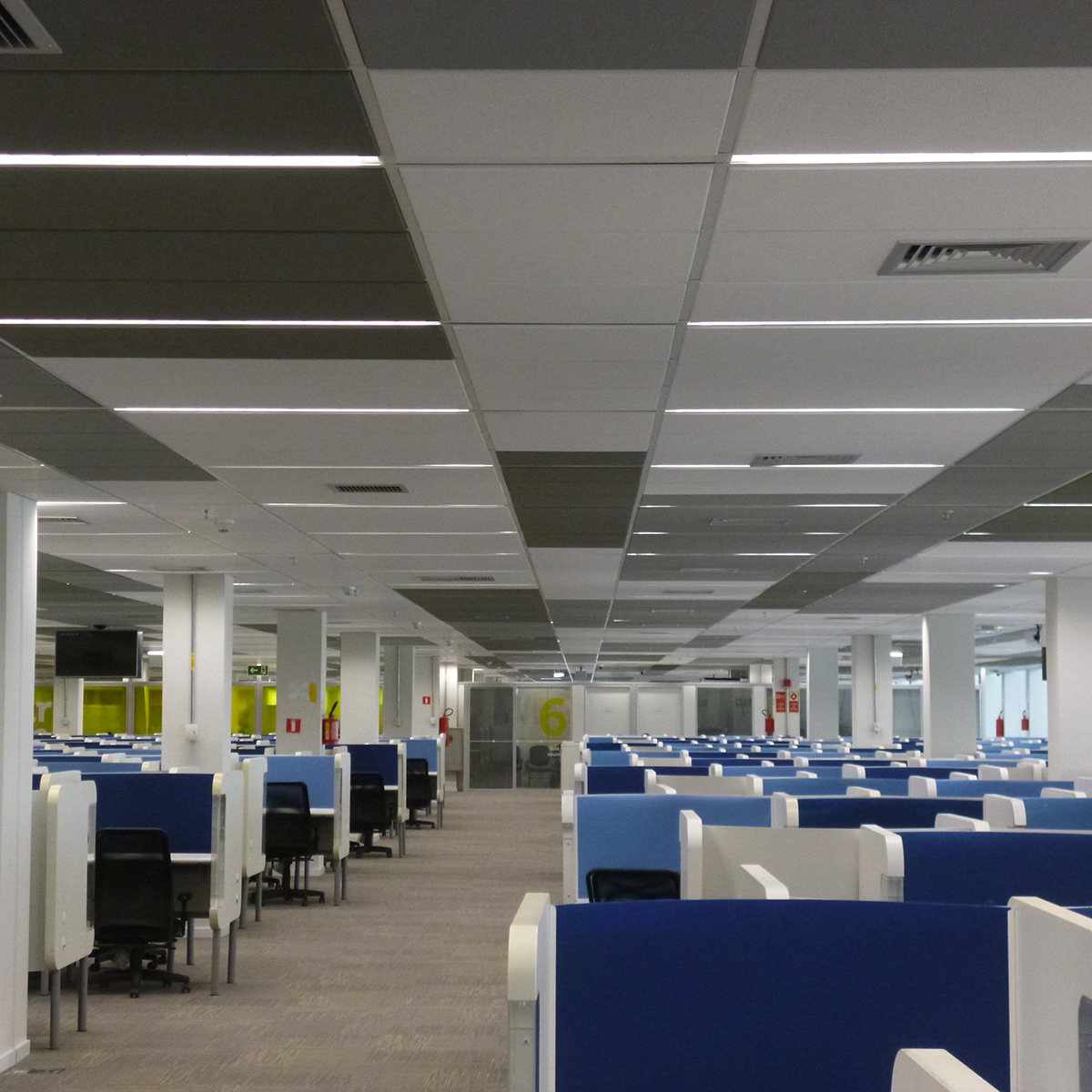
A Call Center for 4,000 customer service positions. All other dimensions are based on this number of positions.
The call center, like a data center, is characterized as a "mission-critical" building, meaning it operates 24 hours a day and cannot be offline. Therefore, it receives all essential systems and equipment in duplicate (backup), generating a high demand for space.
The fortunate choice of building, among other factors, was due to the dimensions of the ground floor (5,400 m²), the first floor (5,400 m²), and the typical floors (5,080 m²), which allowed for the placement of infrastructure and utilities on the ground floor and customer service positions on the other floors.
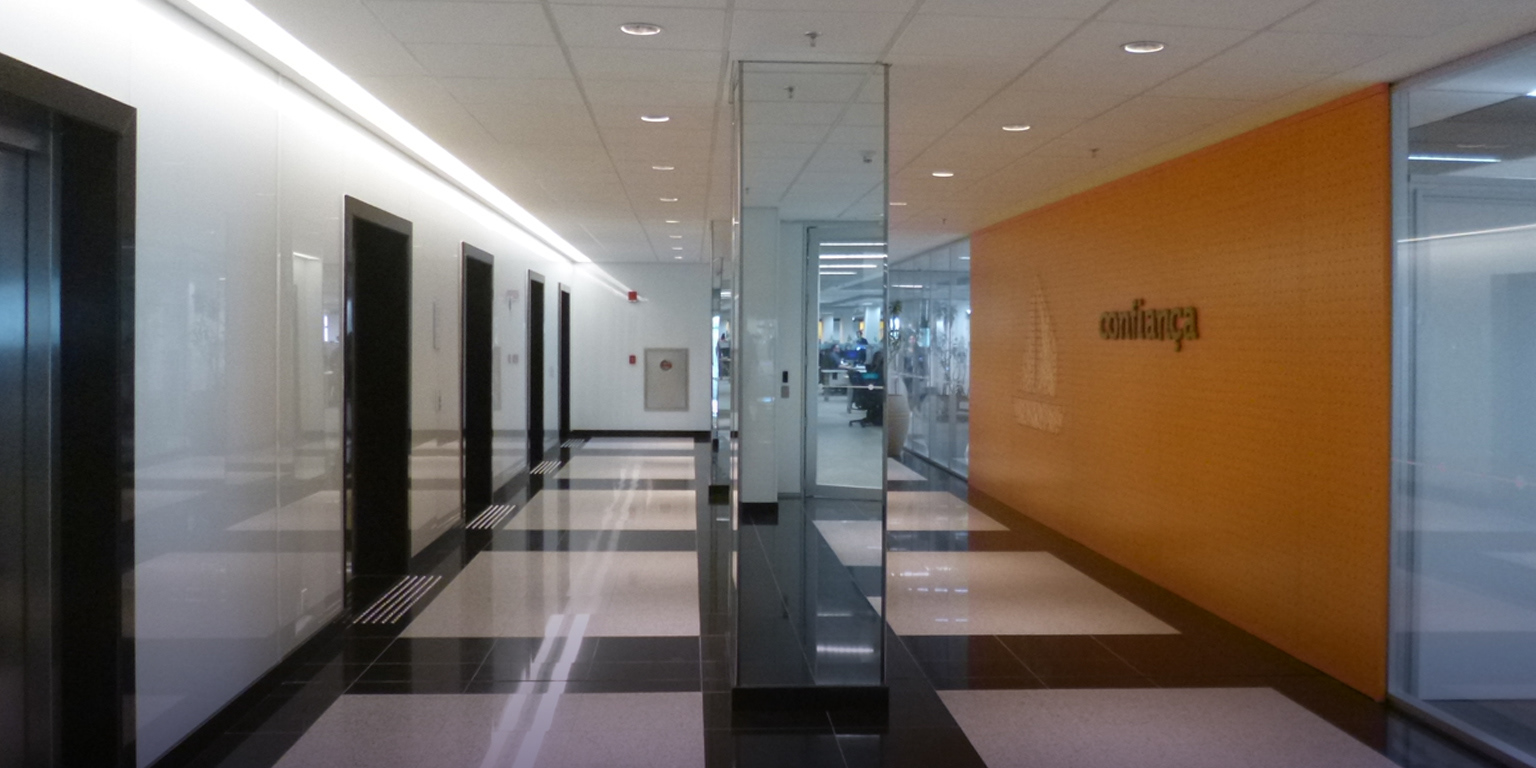
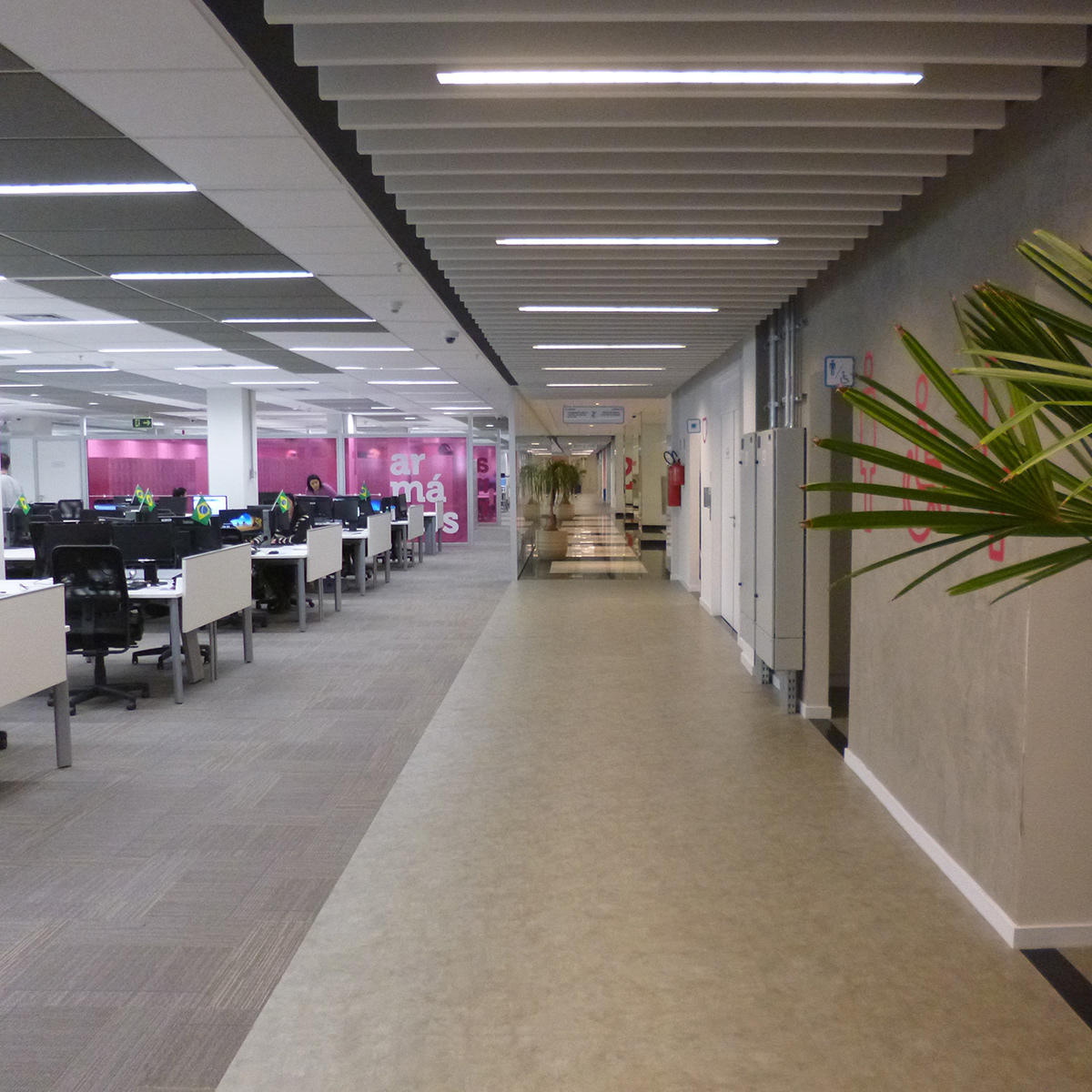
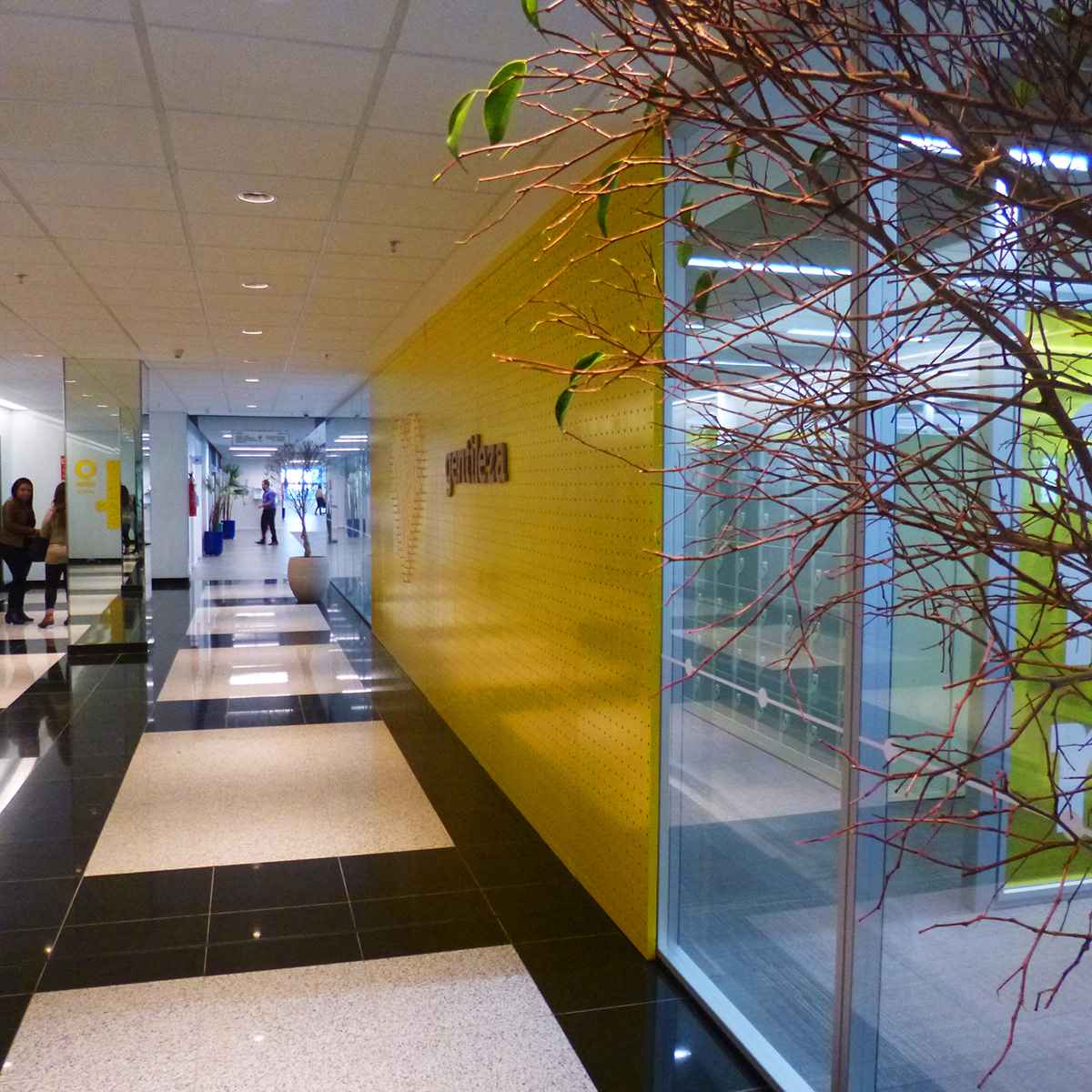
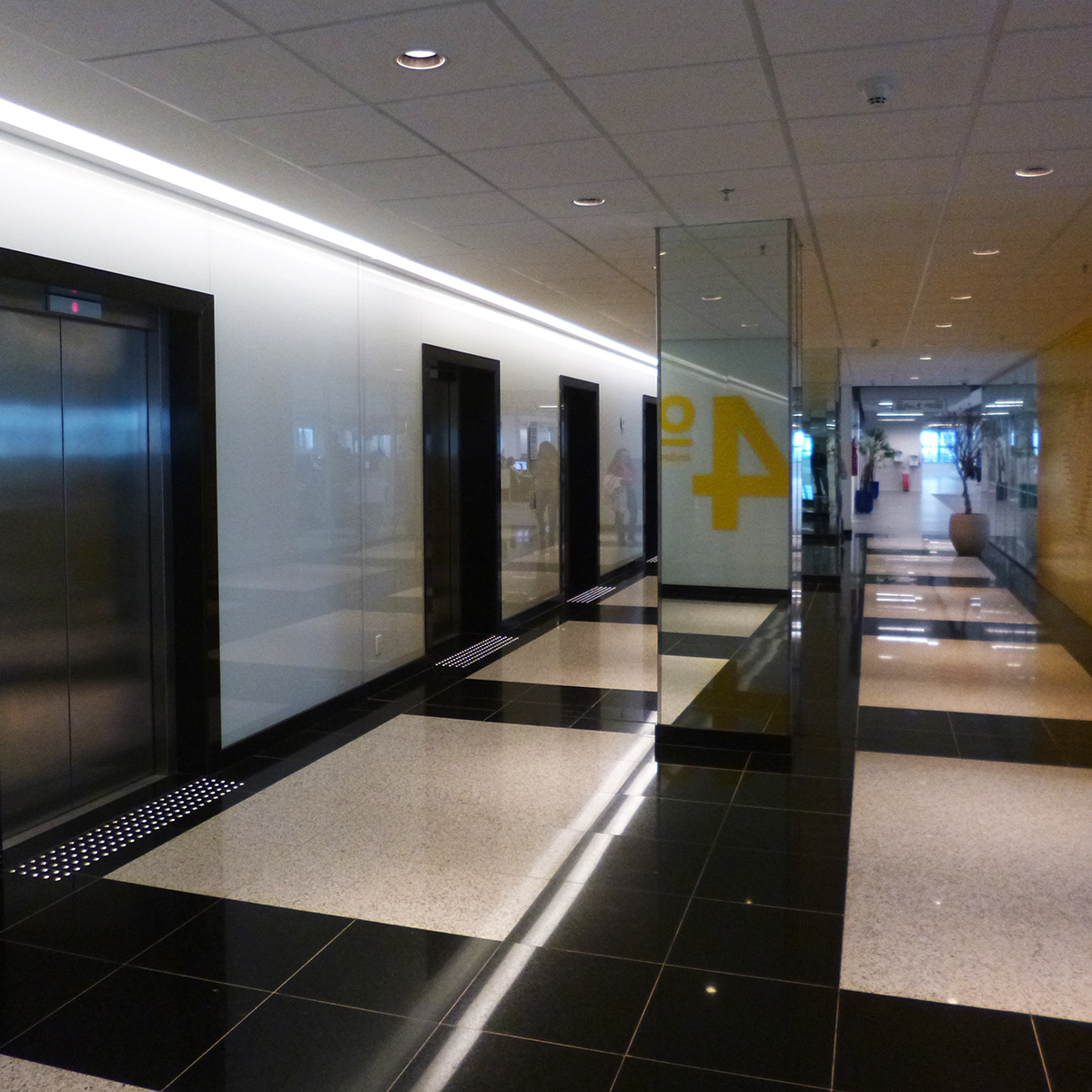
On the ground floor, in addition to all the technical areas, there is also a medical clinic, a food court and cafeteria, as well as common areas.
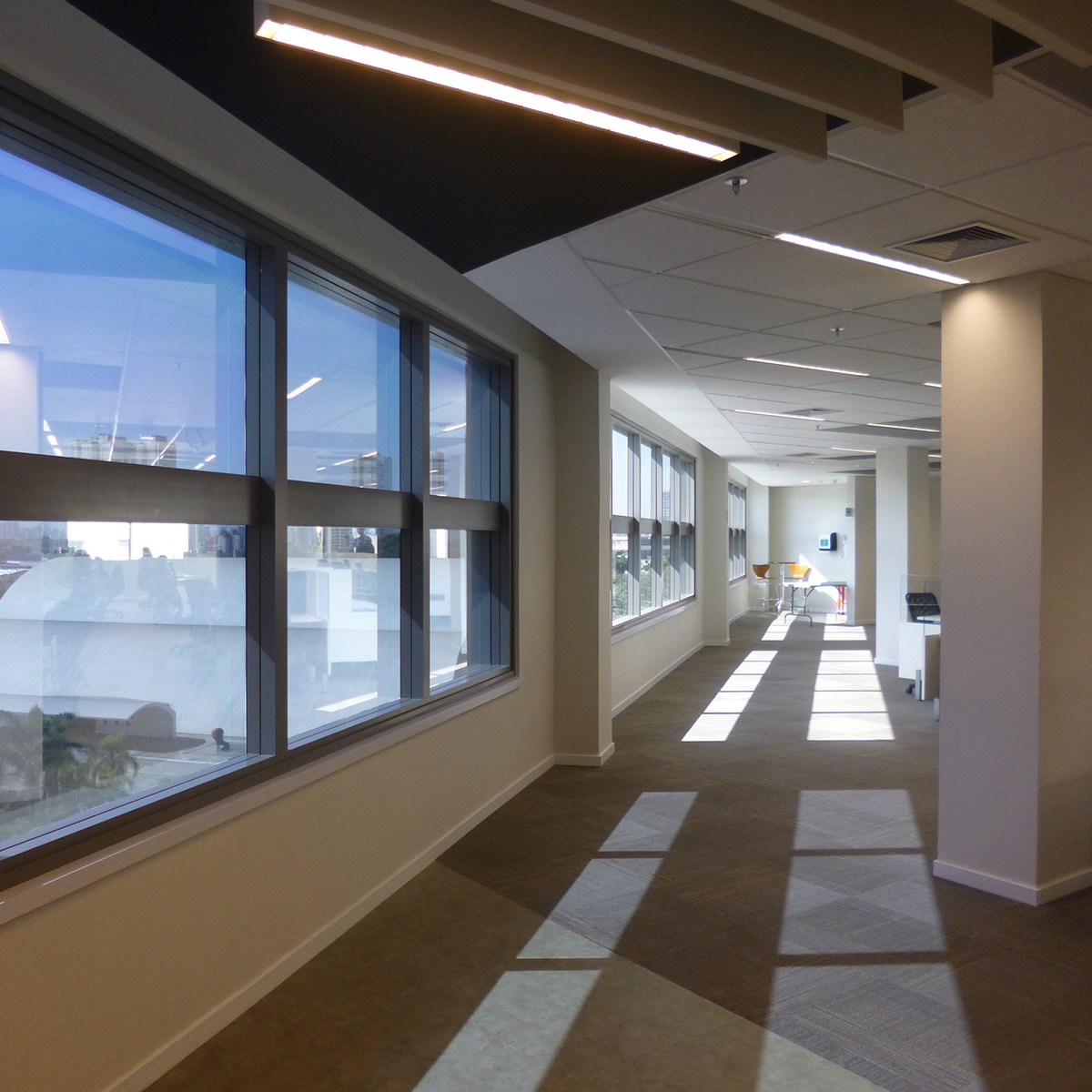
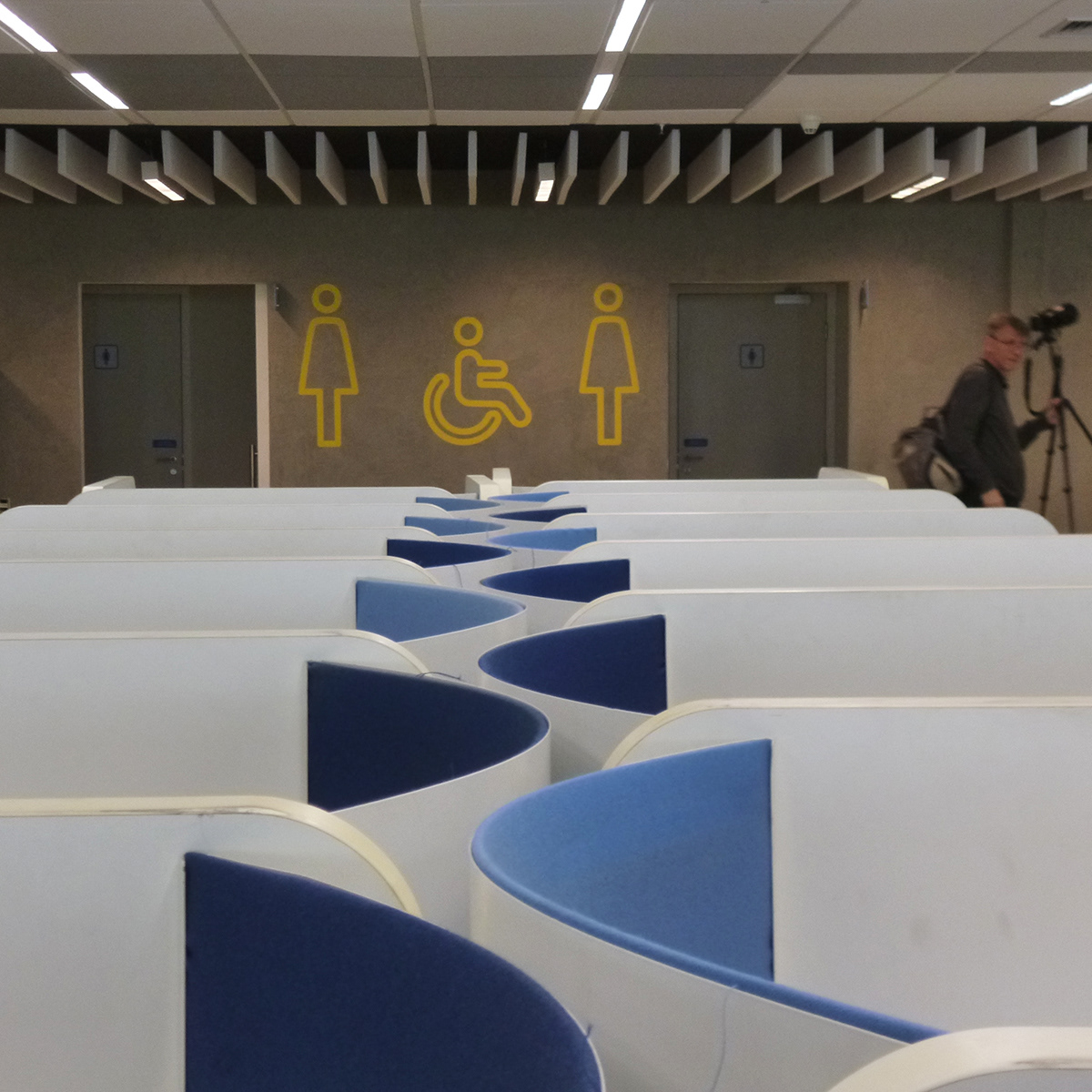
The quality of the space and comfort for users was a priority for our client.
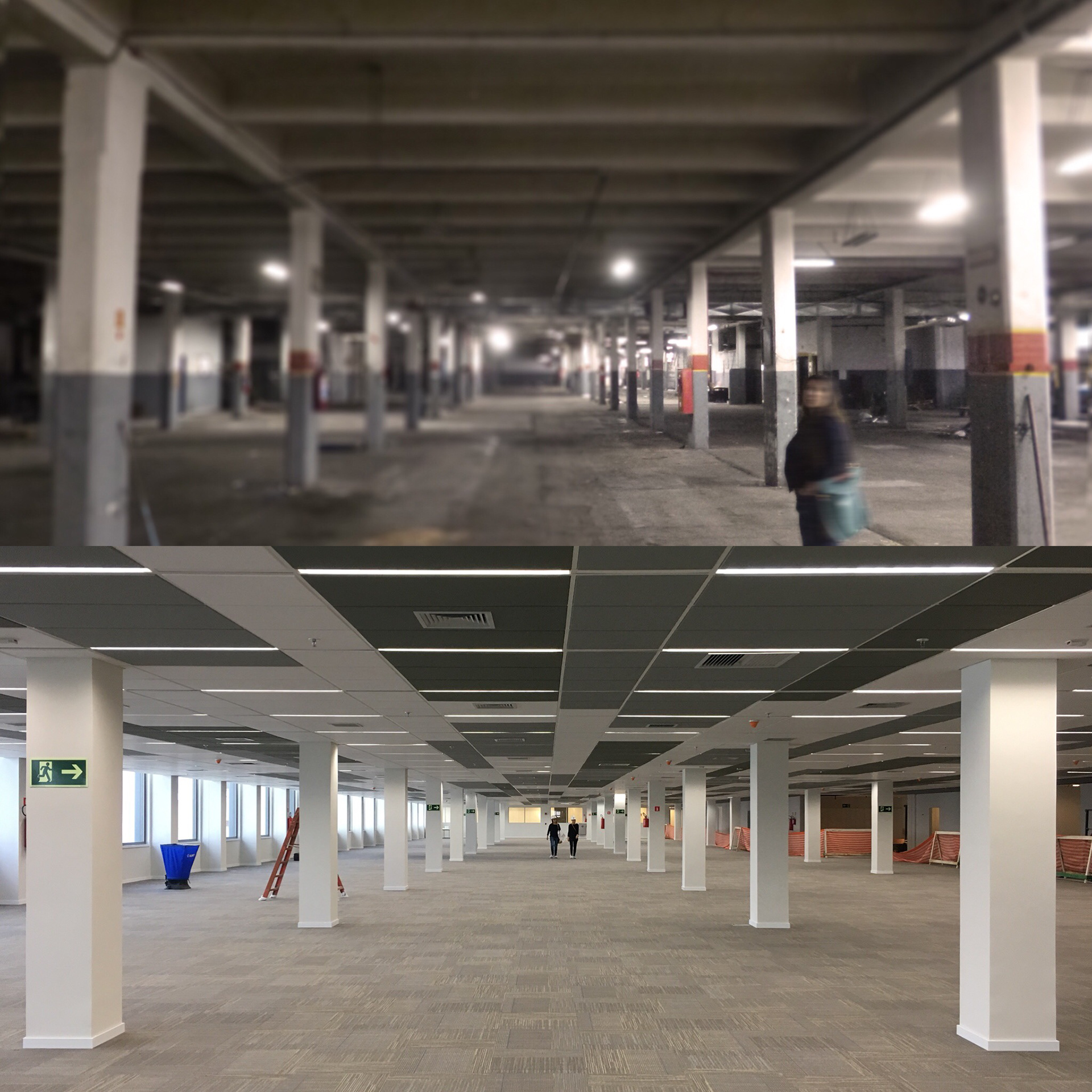
Photo showing the contrast between the survey, a stage prior to the design, and the final phase of construction, before the building is occupied.
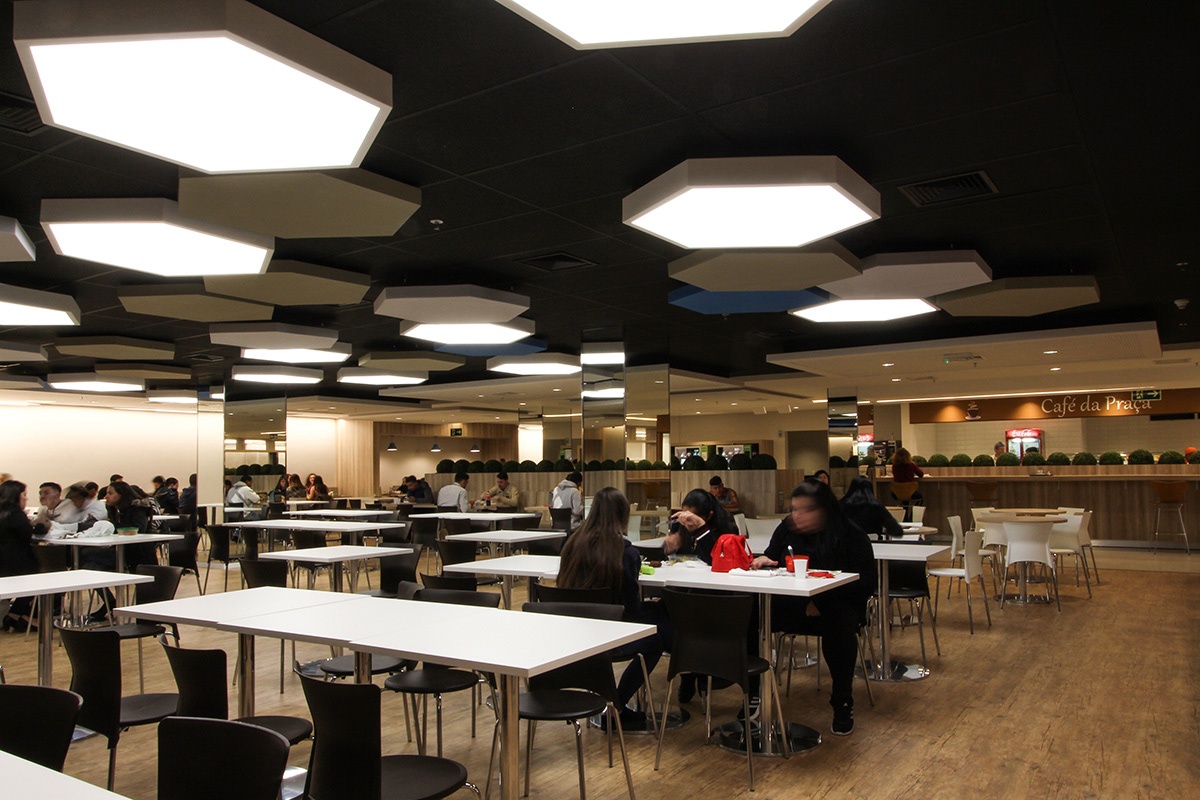
Food court, snack bar and common areas on the ground floor.
Facade Retrofit
Photos by Alexandre Kroner
Photos by Alexandre Kroner
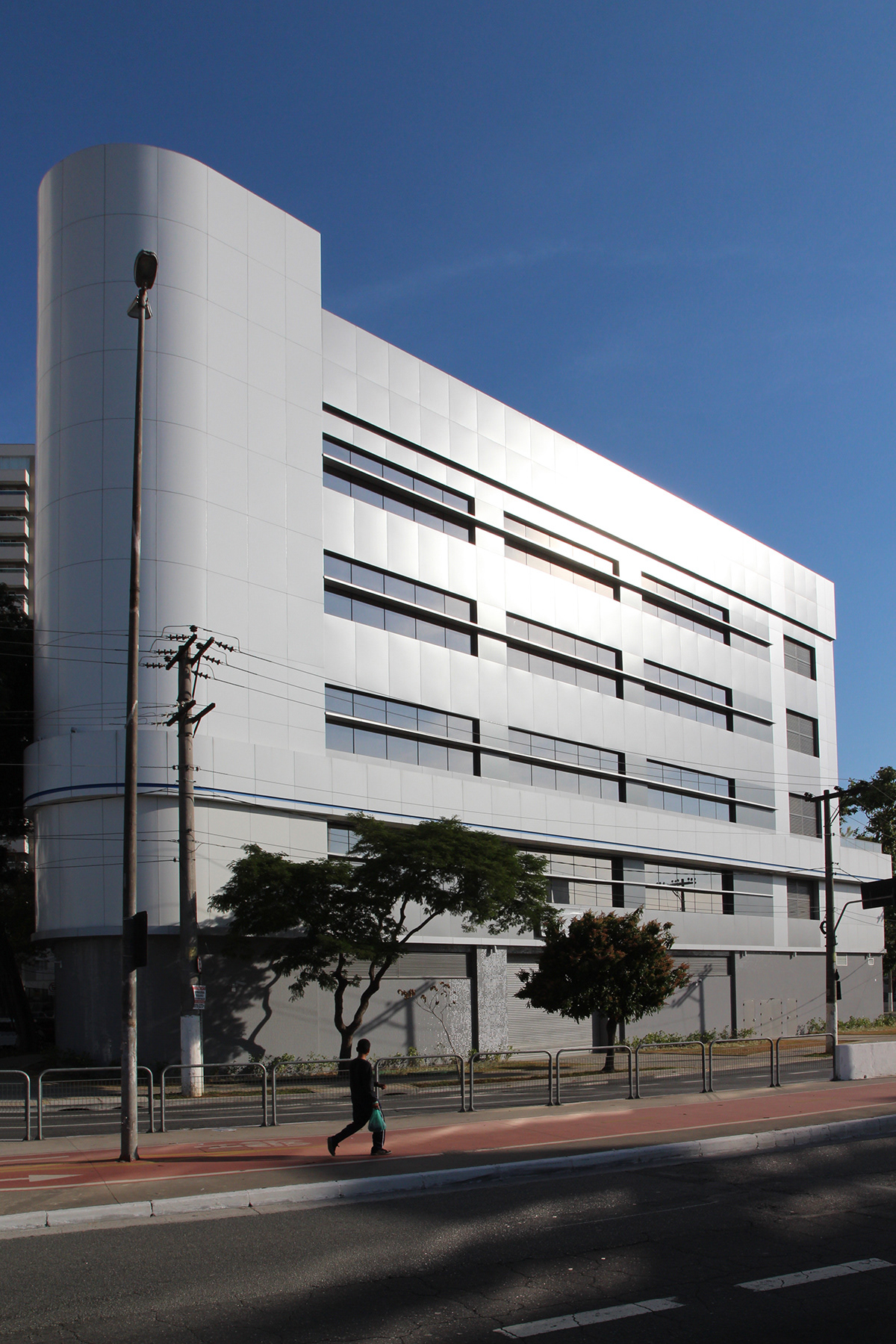
On the facade, we studied three material options: composite aluminum, ventilated ceramic, and paint.
After analysis and verifying the cost/benefit ratio, we opted for composite aluminum. It is a material with tested and approved use in numerous projects, with good color and gloss options. One of our concerns was the proximity to the Memorial da América Latina, an icon of the city.
Although we wanted to highlight our location, we could not visually interfere with the Memorial, and this did not happen.
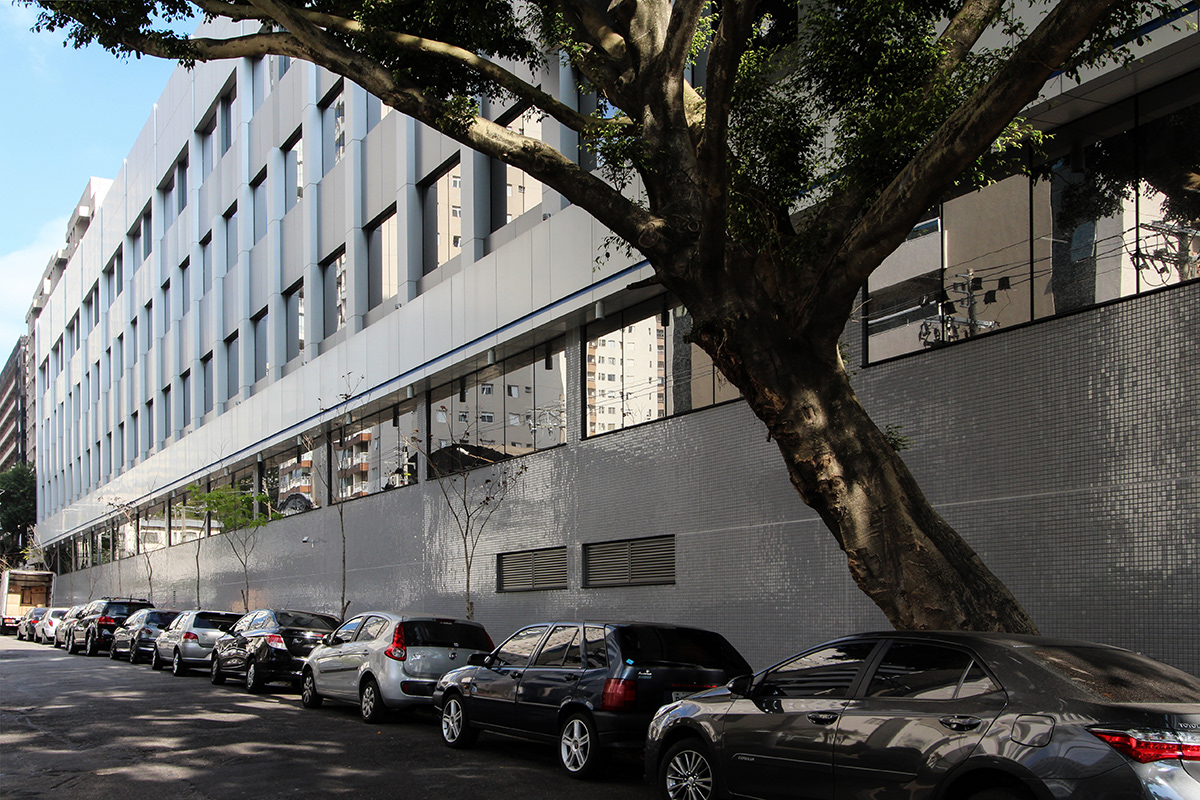
From the outset, it was clear that Rua Ferreira de Castro, due to its length, should have a facade that, although repetitive, would have a varied volumetric modulation to break the effect of continuity.
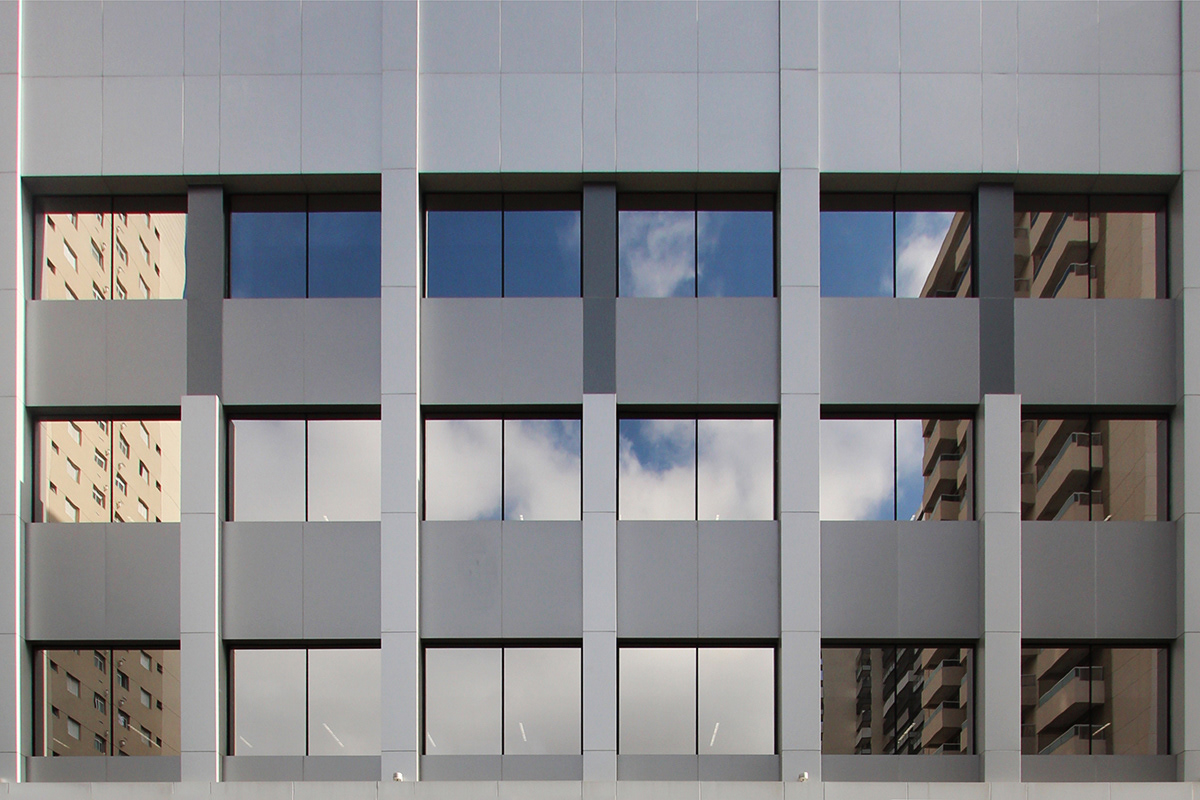
We opted to clad the existing pillars with ACM (Aluminum Composite Material) in a single silver color. We created false pillars that frame the new window frames, and varying the color of the ACM to graphite helped to break the rhythm of continuity.
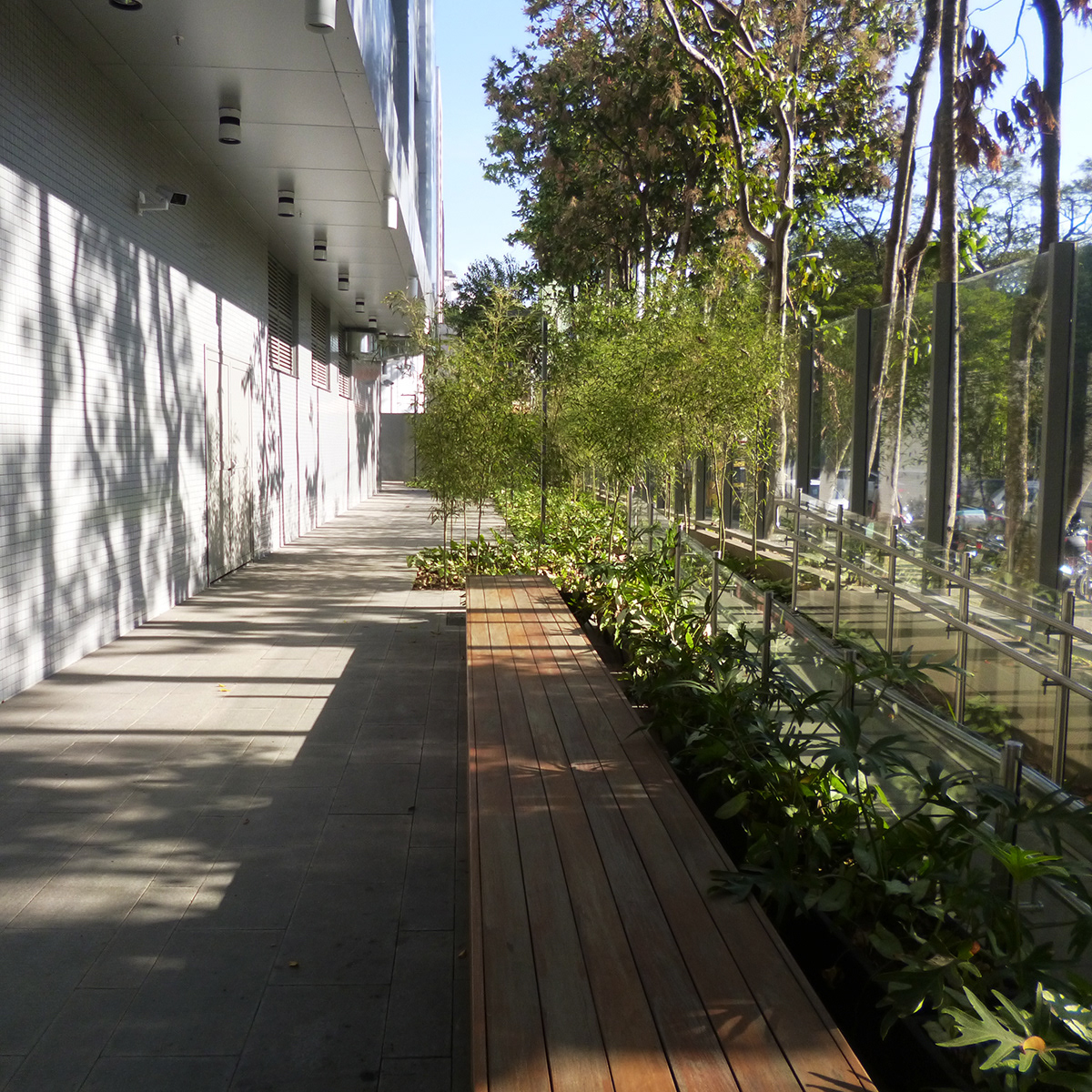
The parapet is a large horizontal strip in graphite that finishes off the pillars. At ground level, we used gray anti-graffiti ceramic tiles, and just above, the client's institutional signage strip. A point to highlight was the creation of lighting along the entire length of the facade, making the street brighter and safer. The sidewalk was replaced and received planters.
The large volumes of the elevator and stairwell shafts were clad in white, creating a very harmonious palette of white, silver, and graphite. A point of great importance is the presence of large trees along almost the entire length of this facade.
The trees conceal part of the facade, but at the same time integrate the building with the plaza next to the entrance, creating an unexpected effect for users right at the building's entrance.
The facade on Av. Auro de Moura Andrade is marked by horizontal sections in ACM and glass, finished on its right side by a vertical section and on the left by a cylindrical tower, which received silver ACM and lighting. The tower breaks the height of the building, marking the entrance to the building.
Original text in Portuguese: Renato Siqueira
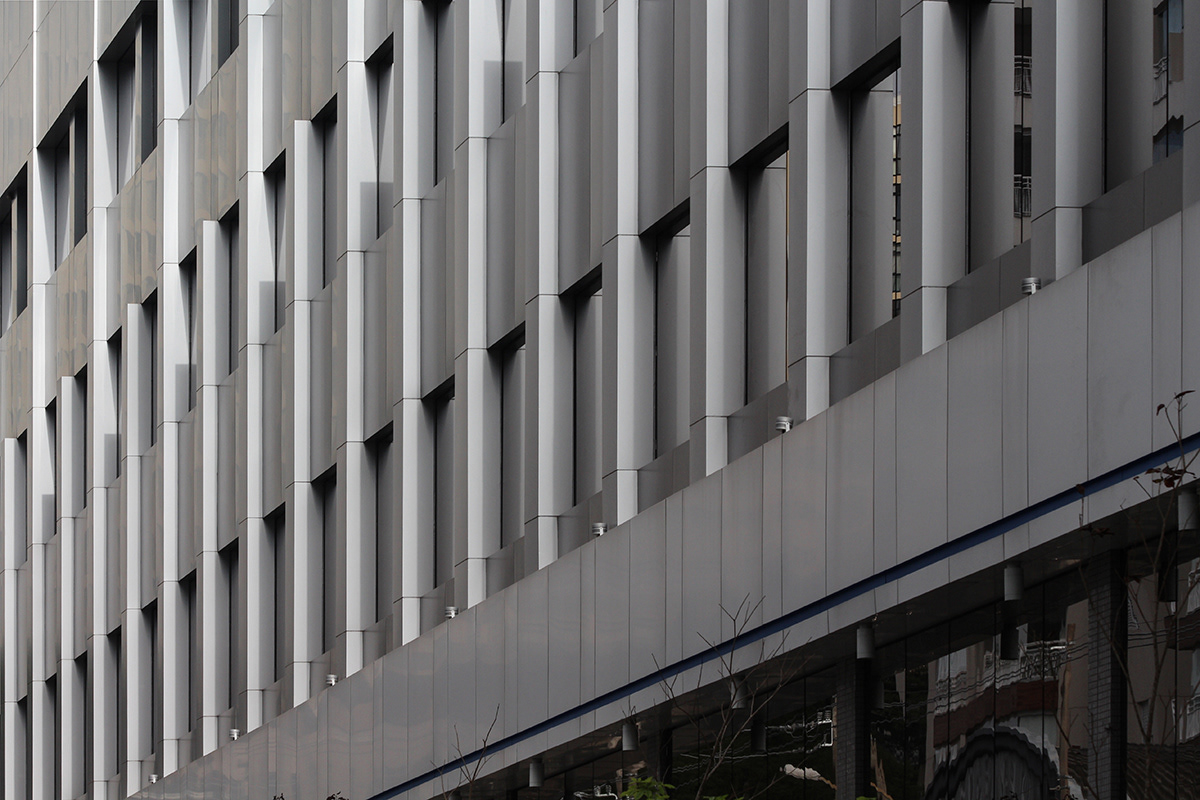
Photo by Alexandre Kröner
Equipe Técnica:
Triplo R Arquitetura
Concepção, Interiores e Gerenciamento de Projetos
Concepção, Interiores e Gerenciamento de Projetos
Renato Siqueira
Frederico Marques
Fernanda Berlfein
Walmir Cunha
Alfredo Ferreira
Kröner Zanutto Arquitetos
Desenvolvimento de Projeto
Desenvolvimento de Projeto
Karin Kröner
Alexandre Kröner
Anderson Zanutto
Viviana Butignoli
Danielle Diniz
Alinne Barros
Thanks for taking a look!